Behind the Clapperboard: The American Crews Flying In for Saudi Arabia's Production Boom
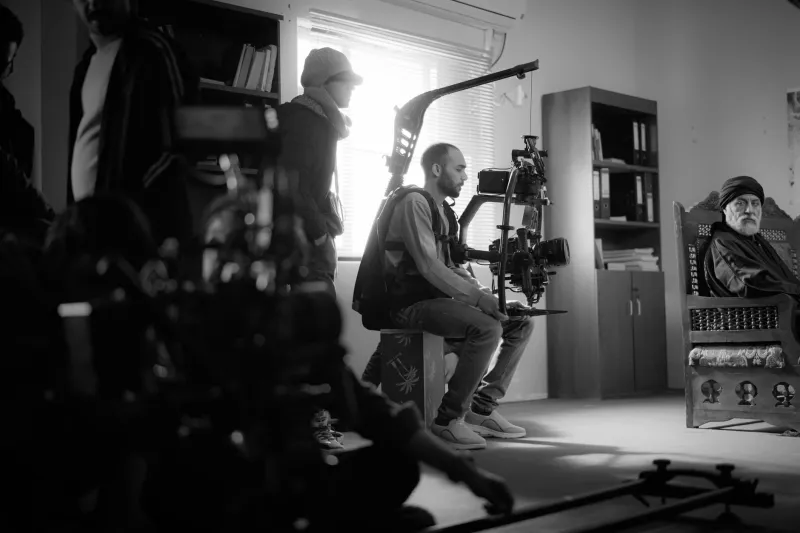
For a generation of American below-the-line talent, the Gulf was not on the map. The work lived in Atlanta, Albuquerque, and a rotating cast of tax-incentive states. That geography is shifting. Saudi Arabia has spent the past several years assembling a screen industry from a standing start, and the crews building it include a steady trickle of US cinematographers, editors, production designers, and sound specialists on contracts measured in weeks rather than years.
The pipeline is real, if narrow. It runs through referrals, a handful of production service companies, and line producers who have already worked the region. Understanding how it operates is the difference between a well-paid adventure and an expensive misadventure.
An industry assembled in under a decade
The infrastructure is younger than most of the people working on it. Commercial cinema returned to the Kingdom in 2018, and since then the build-out has moved quickly: the Red Sea International Film Festival in Jeddah, the Film AlUla production ecosystem with stages and location services near the heritage sites, media facilities at NEOM, the Ithra complex in Dhahran, broadcast and streaming studios operated by regional media groups, and a national film commission that has been developing production incentives.
That speed creates the demand. It also creates the friction. Departments, vendor relationships, and on-set conventions that took a century to settle in Los Angeles are being negotiated in real time, often with a mix of local talent in junior roles and imported specialists in senior ones.
Where the calls actually come from
Almost nobody is cast through a formal application. Offers arrive from line producers, production service companies, and US-based coordinators who have worked Gulf shoots and keep a short list. Guild rosters rarely apply, and the call often comes with little lead time.
For American crew, the practical implication is that reputation travels faster than a resume. A department head who delivers on a first Saudi contract becomes a recurring name; one who arrives unprepared tends not to be called twice. Several US crew members describe the market as small enough that a single bad wrap report circulates widely.
The pay conversation
Compensation customarily combines a day rate or weekly flat with per diem, housing, transport, and flights. Reported day rates for experienced department heads generally sit in a range comparable to mid-tier US commercial work, though the package — not the rate — is where offers diverge. Flights are typically economy, with premium cabins sometimes negotiated for senior roles. Kit rental can be a meaningful share of a cinematographer's or gaffer's income, so confirm whether a personally owned package is being rented, who insures it, and whether customs paperwork is handled on your behalf.
Ask for the following in writing: rate, overtime treatment, per diem, housing standard (hotel, serviced apartment, or villa), ground transport, medical coverage, kit rental, screen credit, and cancellation terms. Productions that hesitate on cancellation language are telling you how they handle risk.
Conditions on the ground
The working week runs Sunday through Thursday, with Friday and Saturday as the weekend. During Ramadan, schedules compress and many productions shift toward night work; non-Muslim crew are generally expected to be discreet about food and drink during daylight hours in public settings.
Summer heat is a scheduling fact rather than a hardship story — exterior work migrates to night, and call sheets are built around it. Prayer breaks are structured into the day. Many productions pair imported department heads with local crew in training, and a willingness to teach is often as valued as technical skill.
Permits are the quiet determinant of any schedule. Commercial filming requires approvals, and location work at heritage sites or in public space can take considerably longer to clear than a US crew expects. Drone use is tightly controlled. Productions that have done this before build slack into the calendar; those that have not often discover the problem on day one.
The paperwork and the calendar trap
The visa is typically a work visit category sponsored by the production or its local service partner, and it needs weeks, not days. Confirm in writing who is handling the application and keep passport validity comfortably beyond your travel window.
The tax conversation deserves an early call with an accountant rather than a wrap-day guess. US citizens report worldwide income, and the foreign earned income exclusion depends on a physical presence test of 330 full days abroad across a twelve-month period — a six-week shoot does not qualify, and a string of short trips can produce a genuinely messy filing. There is no comprehensive US–Saudi income tax treaty, which makes questions about local withholding worth raising before you accept.
The career math
The upside is obvious: credits on international productions, relationships that cross into other Gulf markets, and rates that beat a slow domestic season. The cost is less visible. Short foreign contracts can interrupt guild health-plan hours and pension credits, and American union members should check how overseas work is treated before assuming it counts.
Before you book the flight
Verify the production entity and its track record. Get the contract signed before departure. Confirm visa sponsorship, insurance including medical evacuation, and gear coverage. Ask about dress expectations, photography rules, and the alcohol policy, which is prohibitive. Register your trip with the US Embassy's traveler enrollment program. Then pack for heat, modesty, and a schedule that can move.
The American crews already working the Kingdom tend to describe it the same way: demanding, unfamiliar, occasionally chaotic, and professionally interesting in a way that a fourth season of a domestic series is not. That combination is the entire pitch.