AlUla at Dawn, Jeddah After Dark: Five Saudi Places That Rewrite the American Script
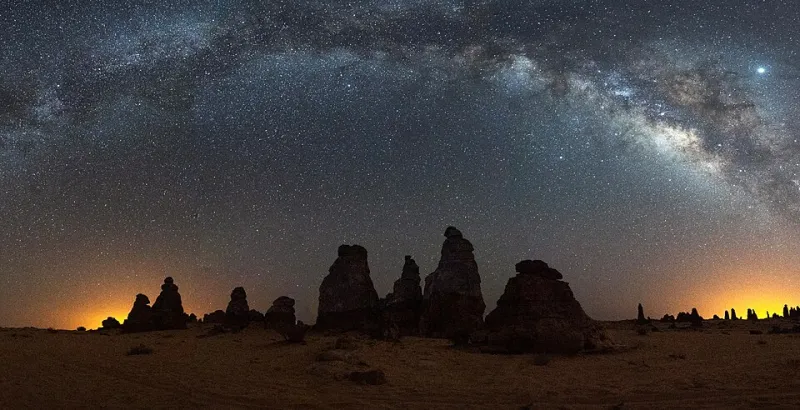
Photo: Saudi Press Agency (SPA), CC BY-SA 4.0, via Wikimedia Commons
Why Your Mental Image of Saudi Arabia Is Probably a Decade Old
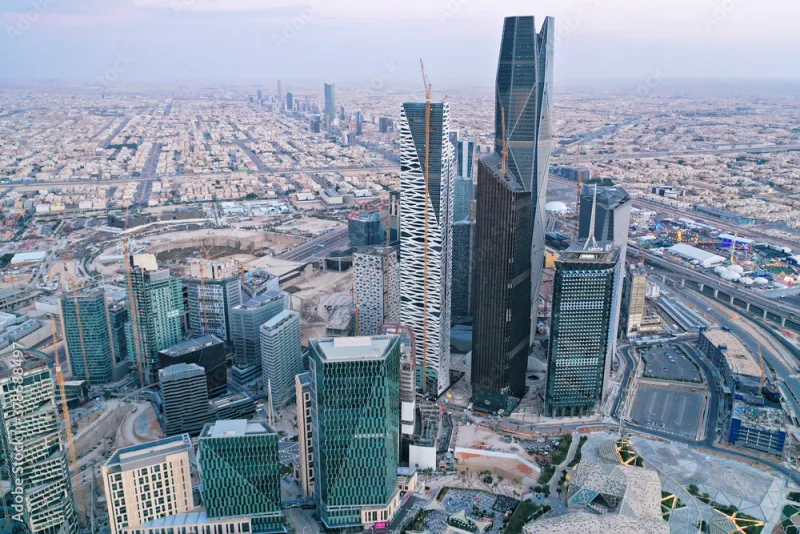
Ask most Americans what they know about Saudi Arabia and you'll get one of three answers: oil, Riyadh's corporate towers, or a place they've simply never considered visiting. That picture is badly out of date. Tourist visas launched in 2019, U.S. carriers and Gulf airlines have added routes, and the country's cultural opening has moved faster than most coverage suggests.
Here are five places that will rearrange your assumptions — and why each one matters right now.
1. AlUla: America's National Parks Meet Petra
Picture Utah's canyon country, but with tombs carved into the rock 2,000 years before European settlers arrived anywhere in North America. Hegra, Saudi Arabia's first UNESCO World Heritage site, features 111 monumental Nabataean tombs — cousins to Petra in Jordan, but with the crowds of a quiet Tuesday.
Add the mirrored structure of Maraya, the world's largest mirrored building hosting international concerts, and hot-air balloon flights over the oasis at sunrise. AlUla is the clearest proof that Saudi Arabia is building a tourism industry from scratch, and it's built to American comfort standards: English-language tours, excellent hotels, and easy online booking.
2. Jeddah's Al-Balad: The Old Town Nobody Pictured
The stereotype says Saudi Arabia has no history on display. Al-Balad, Jeddah's UNESCO-listed old town, says otherwise. Coral-stone houses dating to the 1500s rise several stories, their wooden lattice windows — rawasheen — casting intricate shadows over alleys that once served pilgrims arriving on the Hajj route.
Restored mansions now house galleries and cafés, and the atmosphere is more New Orleans' French Quarter than the sterile business district Americans imagine. Come at dusk, when the call to prayer echoes off the coral walls and the fish restaurants near the corniche fire up their grills.
3. The Red Sea Coast: The Beach Version You Didn't Know Existed
Between Jeddah and the new Red Sea developments lies water that rivals anything in the Caribbean — coral reefs, diving with turtles and reef sharks, and island resorts still in their opening years. The Red Sea giga-project is positioning itself as a luxury regenerative-tourism destination, and American travelers are among the early adopters. Visibility underwater often exceeds 30 meters, which is a sentence you'd normally associate with the Maldives, not a country most Americans couldn't find on a map.
4. The NEOM Corridor: Visiting the Future, Construction Zone and All
Northwest Saudi Arabia is home to the most ambitious — and most debated — megaproject on Earth. NEOM, with its planned linear city The Line, mountain destination Trojena, and island developments, is still very much under construction. So why include it? Because driving through Tabuk province, you'll pass worker cities, staged infrastructure, and the raw outline of a place that intends to reinvent what a city is.
Go for the honesty of it: few travelers will ever say they watched a megacity being born. Pair the drive with the stunning Gulf of Aqaba coastline nearby, where Jordan, Egypt, and Israel meet across the water.
5. Riyadh: The Capital That Doesn't Match Its Reputation
Yes, it's a business city — but Riyadh's cultural scene has exploded. Diriyah, the mud-brick birthplace of the Saudi state, is being restored into a heritage district on the scale of a national park. Boulevard Riyadh City hosts concerts and events that draw international headliners. Edge-of-the-world escarpments an hour from downtown offer hikes across a cliff line that genuinely feels like the end of the continent — because geologically, it is.
The Bigger Shift: Why This Is Happening
Every one of these places reflects the same underlying transformation: an economy diversifying beyond oil, a young population — roughly two-thirds of Saudis are under 35 — and a government that decided tourism, not just trade, is a national priority. Women's participation in the workforce has surged, cinemas and live music are back after decades, and the social weather has changed visibly in the space of a few years.
None of this means the country is indistinguishable from anywhere else. Alcohol is prohibited, dress norms are modest (though far more relaxed than the American imagination suggests), and the call to prayer structures the day. That difference is part of the appeal — this is travel to a place still writing its own next chapter.
Practical Notes for 2025
U.S. citizens can obtain a tourist e-visa online in minutes, or a visa on arrival. Flights connect via Riyadh and Jeddah from U.S. hubs with one stop on Gulf carriers, and nonstop service has been expanding. October through March is the sweet season — summers are brutal inland, though the Red Sea coast stays diveable.
If your 2025 travel list already includes the usual suspects, consider slotting Saudi Arabia in as the wildcard. Five years ago the question was whether you could go. Now it's whether you'll get there before everyone else does.