Robots, Royalty, and a Million-Riyal Finish Line: The Saudi Sport Reinventing an Ancient Pastime
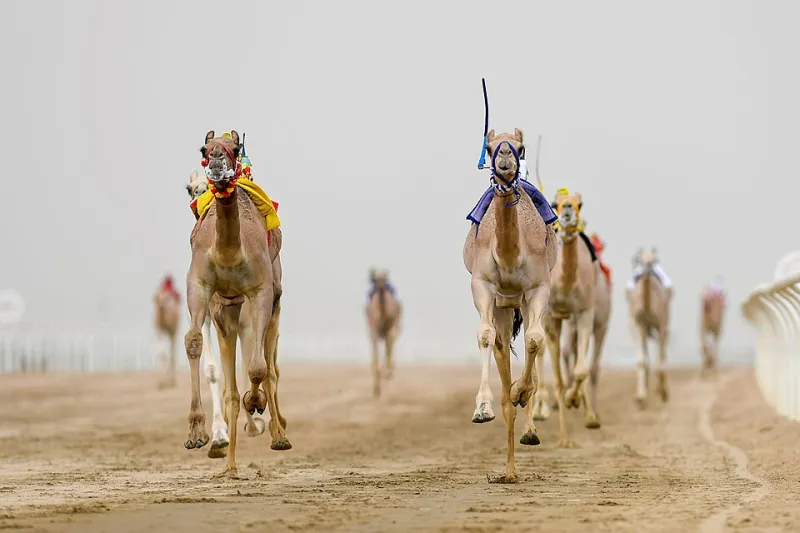
Photo: وكالة الأنباء السعودية, CC BY-SA 4.0, via Wikimedia Commons
Ask most Americans to picture a camel, and they'll imagine a zoo enclosure or a desert postcard. Ask someone in Riyadh, and they'll tell you about breeding lines, GPS trackers, and a prize purse that can outstrip the winnings at a mid-tier NASCAR event.
Camel racing, once a pastime of Bedouin communities, has evolved into one of Saudi Arabia's most surprising entertainment industries. And for American sports operators — the minor league executives, the regional promoters, the entrepreneurs trying to keep niche spectator sports alive — there's a genuinely useful story here about how tradition and technology can rescue an old format rather than replace it.
A Sport That Got Serious
The scale catches first-time visitors off guard. The King Abdulaziz Camel Festival, held outside Riyadh, draws thousands of camels and competitors from across the Gulf. Races stretch over kilometers of purpose-built track. Top animals change hands for sums that would buy a suburban house in Dallas — sometimes several of them.
What transformed the sport wasn't money alone. It was professionalization: standardized rules, veterinary oversight, official breeding registries, and broadcast deals that turned a regional curiosity into a scheduled, followable league. In other words, the same infrastructure arc that took American baseball from sandlots to stadiums.
The Robotic Jockey Story
Perhaps the most striking innovation is the jockey. Historically, the sport relied on young riders, a practice that drew international criticism. Saudi Arabia and its Gulf neighbors phased that out entirely, replacing child jockeys with small, government-mandated robots — lightweight mechanical riders strapped to the camel's back, remotely controlled by owners who trail alongside in SUVs, throttling whips and steering via remote.
It sounds absurd until you watch it: a caravan of pickup trucks paralleling a pack of sprinting camels at 40 miles per hour, an owner in traditional dress steering his animal with a joystick. It is, unapologetically, a spectacle — and it solved a human-rights problem while creating a signature visual identity no other sport can claim.
What American Niche Sports Can Learn
US minor leagues, regional rodeo circuits, and independent baseball clubs face a familiar squeeze: aging fanbases, thin broadcast revenue, and competition from streaming everything. The Saudi camel experiment suggests three transferable lessons.
First, lean into what makes you un-copyable. Camel racing didn't modernize by becoming less camel-y. It doubled down on heritage — the breeding culture, the pageantry — while upgrading everything around it. American niche sports often do the opposite, sanding off their quirks to look like major leagues. The lesson: your weirdness is your brand moat.
Second, technology should amplify, not replace. Robotic jockeys didn't remove the human drama; they relocated it to the owner's remote control and the truck convoy. GPS tracking and photo-finish cameras added betting-grade precision. For a US league, that might mean sensor-driven stats for a sport that's never had them, or broadcast angles that turn a local event into national content.
Third, build a calendar, not an event. The festival model gives fans a season to follow, breeders a market to trade in, and sponsors a reason to sign multi-year deals. One-off events die; ecosystems compound.
Why This Matters to American Readers
Saudi Arabia is courting global entertainment investment under Vision 2030, and sports is a centerpiece. American promoters, media companies, and investors are already flying over for hospitality, boxing, and motorsport deals. Camel racing may be further down the list — but as an object lesson in how a legacy sport can be rebuilt for modern audiences, it might be the most instructive one of all.
The next time a struggling American league considers a rebrand, the answer may not be a new logo. It might be a robot jockey.