Before the Plane, the Prep: Inside America's Fast-Growing Pilgrim Airport Infrastructure
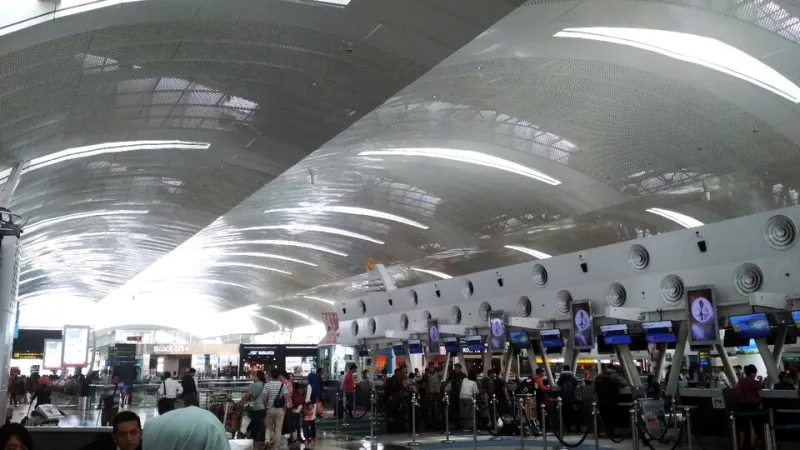
Photo: Sam Hidayat, CC BY-SA 4.0, via Wikimedia Commons
For most American travelers, an international departure begins with the familiar choreography of any big airport: a long security line, a crowded gate, a rushed sandwich. For the growing number of US Muslims performing Hajj or Umrah, however, that experience is starting to look very different. At several of the country's busiest international gateways, a quiet build-out of pilgrim-focused infrastructure is underway — and it is changing the first hours of a journey that, for many, has been years in the making.
A Niche Market Gets Professional
Travel agents who specialize in the American pilgrim corridor describe a market that has matured dramatically over the past decade. What was once a patchwork of group leaders herding travelers through general check-in counters has evolved into coordinated operations with dedicated desks, pre-cleared manifests, and airline staff trained on the specific documentation Hajj and Umrah travelers carry.
"Ten years ago, we were printing itineraries at home and hoping the check-in agent knew what a Umrah visa looked like," says one New Jersey–based operator who organizes departures through JFK. "Now we have airline liaisons, dedicated counters during peak season, and ground staff in Jeddah who expect us. It's a different business."
The numbers explain the investment. Industry estimates place the annual flow of American pilgrims in the tens of thousands, with Umrah — which, unlike Hajj, can be performed year-round — growing fastest. That steady, predictable demand has given airlines and airport operators a reason to treat the route not as seasonal overflow but as a distinct travel segment with its own service standards.
What a Pilgrim Desk Actually Does
The practical differences show up early. At major hubs, pilgrim-focused check-in typically involves document verification tailored to Saudi entry requirements, baggage handling that accounts for the ihram garments and often larger luggage loads travelers bring, and sometimes separate queue management to keep family groups together.
Charter and consolidation programs add another layer. Rather than routing pilgrims through a half-dozen connections, organizers increasingly block seats on scheduled services or assemble charter departures during the Hajj window, when demand spikes sharply over a few weeks. That concentration lets agents negotiate group rates, coordinate arrival times with Saudi-side handlers, and — critically — build in buffer for the tight visa-to-departure timelines the Hajj season imposes.
Airport interfaith liaisons and customer-service managers at several hubs say the requests from pilgrim groups have become routine enough to plan around: quiet rooms for prayer, clear wayfinding for travelers who may be navigating US airports for the first time, and flexibility on rebooking when connecting flights slip.
The Visa Bottleneck Is Loosening
Perhaps the biggest shift has happened on the paperwork side. The introduction of electronic visa platforms for Umrah travelers has compressed a process that once required consulate visits and weeks of waiting into something closer to an airline booking. For US passport holders, that has opened the door to more spontaneous travel — and pushed agents to reposition Umrah not as a once-in-a-lifetime expedition but as a manageable long-weekend-to-two-week trip for those who can afford the airfare.
Hajj remains a different animal. Access is governed by quotas allocated through Saudi authorities to licensed US operators, and the window is rigid. But even here, efficiency gains are real: digital package registration, standardized operator vetting, and better coordination between US departure gateways and Saudi arrival ports have reduced the friction that historically defined the season.
Three Hubs, Three Models
New York's JFK remains the volume leader, benefiting from dense Muslim communities across the tri-state area and abundant nonstop capacity toward the Gulf. The model there is scale: multiple operators, competing package tiers, and airline staff accustomed to pilgrim traffic.
Washington Dulles serves a different profile — heavier on government, diplomatic, and professional travelers, with a strong draw from the DC region's diverse Muslim communities. Agents there report growing demand for premium-cabin Umrah packages bundled around school holidays.
Chicago O'Hare has leaned into its geographic advantage as a connecting hub for the Midwest, consolidating travelers from cities without direct Gulf service. Its strength is aggregation: filling departures from Minneapolis, Detroit, St. Louis, and beyond onto single, well-managed flights.
What It Means for Travelers
For American pilgrims, the professionalization of this corridor translates into concrete benefits: fewer missed connections, clearer pre-departure briefings, and operators who can resolve problems mid-journey rather than after it. It also means pricing transparency is improving, as the market's growth invites comparison and competition.
The advice from veterans of the corridor is consistent regardless of departure city. Book with licensed operators — especially for Hajj, where authorization matters. Confirm visa and health requirements well ahead of travel, as rules can shift season by season. And build slack into your itinerary: a missed connection in a packed Hajj season is a problem no desk can fully solve.
The broader story is one of normalization. What was once an improvised journey cobbled together through family connections and faxed documents is becoming a defined, serviced route in the American travel landscape — one more example of how deeply the ties between the US and Saudi Arabia now run, and of how infrastructure, even the unglamorous airport kind, follows where people go.