From Sitcoms to Small Talk: How American Pop Culture Smooths the Landing for US Expats in Riyadh
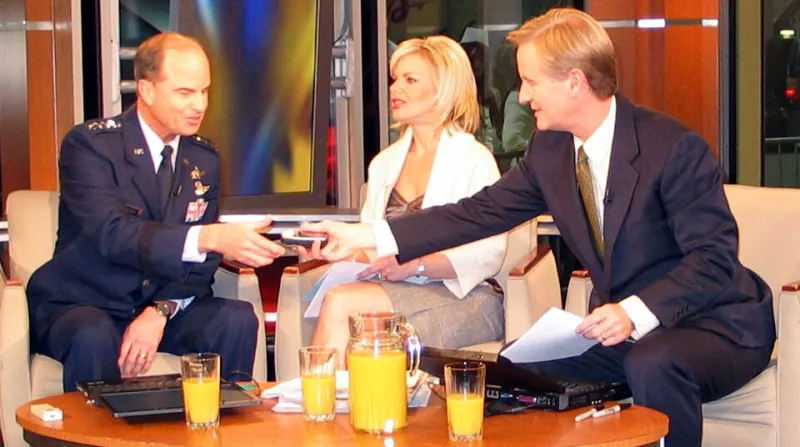
Photo: Captain Johnny Rea (United States Air Force- Space Command Public Affairs), Public domain, via Wikimedia Commons
Ask most Americans what they know about Saudi Arabia and you'll get a short list: oil, camels, maybe Vision 2030 if they've read a business headline lately. Ask many Saudis the same question about America, and the answer is startlingly detailed — the finale of Friends, LeBron's playoff record, which streaming platform picked up the latest Marvel series. For decades, American entertainment has been streaming into Saudi living rooms, and that one-way cultural education is now paying an unexpected dividend for the growing wave of US expats arriving in Riyadh.
The Classroom Was a Couch
Dr. Faisal Al-Otaibi runs a weekly English conversation circle at a cultural center in Olaya, one of Riyadh's busiest commercial districts. His teaching philosophy is unorthodox: skip the textbook, watch an episode of The Office.
"Grammar drills don't teach you how Americans actually talk," he explains. "But when Michael Scott says something absurd and my students laugh in the right place, that's fluency. That's timing. You cannot fake that."
His club, which draws roughly forty professionals and university students each week, is one of dozens across the capital. Some are formal — university-affiliated language labs with attendance sheets. Others are informal WhatsApp groups that organize a viewing night whenever a major American series drops a new season. The common thread is a genuine appetite: English is mandatory in Saudi schools, but screen-based immersion is what made it stick for a generation raised on dubbed-free, subtitled American television.
For arriving US expats, this creates a dynamic few anticipate. "I expected to be the one explaining my culture," says Melissa Grant, a healthcare administrator from Denver who moved to Riyadh in 2023. "Instead, my Saudi colleagues were quoting Seinfeld at me and asking whether I'd ever been to a Super Bowl party. I felt behind."
Sports as a Second Language
Television is only half the story. The NBA has cultivated a devoted Saudi following, and basketball talk has become perhaps the most reliable bridge between American newcomers and their Saudi colleagues. Crown Prince Mohammed bin Salman's broader push to normalize international sports — from Formula 1 in Jeddah to high-profile boxing matches in Riyadh — has accelerated the trend, but basketball fandom predates the glitz.
"My first week at work, a Saudi engineer asked me if I was a Lakers fan or a Celtics fan," recalls James Whitfield, a project manager from Chicago. "It was basically a personality test. I passed. By Friday I had weekend plans."
Local sports cafés in Riyadh now routinely screen NBA games live, and the time-zone math works in everyone's favor: evening tip-offs in the US land in the early morning hours in Saudi Arabia, meaning die-hards on both sides share the same bleary-eyed commitment.
How Newcomers Can Use the Shortcut
For Americans preparing to relocate, the practical takeaway is simple: your pop culture fluency is a professional asset. Career coaches working with US expats in the Gulf increasingly recommend a light cultural prep before departure — not language courses, but a refresher on the shows and sports your future colleagues already know.
A few approaches that work:
- Lead with questions, not lectures. Saudis who learned English from American TV often want to verify their understanding with a native speaker. Being asked "Do Americans actually say that?" is an invitation, not a test.
- Watch what they watch. Streaming availability in the Kingdom mirrors much of the US catalog. Knowing the current hit series gives you instant common ground at the coffee machine.
- Embrace the sports debrief. Even casual NBA knowledge signals effort. Explaining the rules to a genuinely curious Saudi colleague can be a friendship-forming ritual.
- Reciprocate. The exchange runs both ways. Americans who ask about Saudi series — the Ramadan dramas that dominate local viewing each year — report that curiosity about their host culture is received as respect.
The Deeper Current
Cultural scholars note that this dynamic reflects something larger than entertainment. Saudi Arabia's youthful population — the majority of the Kingdom is under thirty-five — has consumed American media at scale while the reverse flow has been minimal. The result is an asymmetry of familiarity that newcomers can either exploit awkwardly or lean into gracefully.
"There's a moment that happens over and over," says Al-Otaibi. "An American realizes the person across the table knows their hometown's football team, their favorite sitcom, the song from their high school prom. The distance collapses. After that, everything else — business, friendship, trust — gets easier."
For US expats weighing a move to the Kingdom, the advice from those already there is consistent: don't overthink the icebreakers. Somewhere in Riyadh, a new colleague is waiting to ask whether you caught last night's game — and the answer might be the start of your social calendar.
In a country transforming as quickly as Saudi Arabia, the softest landing sometimes comes not from a relocation package or an orientation seminar, but from a shared laugh at a joke that crossed an ocean years ago.